By 2026, the digital landscape is expected to undergo a significant transformation, driven by advancements in artificial intelligence and its integration into search engine optimization. As AI technologies become more sophisticated, the way search engines understand, process, and rank content will fundamentally change.
The online world is evolving rapidly, and SEO strategies are shifting from traditional keyword-stuffing and link-building to more refined approaches that prioritize qualitysearch systems is emerging, one that demands a deeper understanding of AI content detection and E-E-A-T compliance.
Key Takeaways
- The digital landscape is undergoing a profound transformation as AI content detection technologies become more sophisticated.
- Content creators will face new challenges and opportunities as search engines evolve their algorithms.
- E-E-A-T compliance is growing increasingly important for search visibility.
- Practical strategies are needed to ensure content remains compliant and competitive.
- Understanding emerging trends is crucial for maintaining search visibility and authority.
The Evolution of AI Content Detection Technologies
AI content detection has undergone significant transformations, from simple pattern recognition to complex analysis of nuanced text aspects. As artificial intelligence continues to advance, the sophistication of content detection technologies has increased, enabling more accurate differentiation between human and AI-generated content.
From Basic Detection to Advanced AI Recognition Systems
The early days of AI content detection relied heavily on statistical analysis and keyword patterns. However, modern detection systems have evolved to employ neural networks and deep learning techniques, significantly improving their accuracy. These advanced systems can analyze various factors, including linguistic diversity, information density, and structural consistency, to identify AI-generated content.
By 2026, detection technologies are expected to incorporate multimodal analysis, examining not just text but also its integration with images, videos, and interactive elements. This shift reflects the growing complexity of digital content and the need for more sophisticated detection methods.
How Current AI Detection Tools Work
Current AI detection tools analyze a range of factors to differentiate between human and AI-created content. These include stylistic patterns, semantic coherence, and contextual relevance. Moreover, modern detection systems are increasingly focusing on metadata and technical markers that reveal content provenance, allowing for more reliable attribution of content sources.
The ongoing “arms race” between content generation and detection technologies continues to accelerate, with each advancement in generative AI quickly followed by more sophisticated detection methods. As a result, the search for effective AI content detection continues, driven by the need for accurate and reliable content evaluation.
Understanding E-E-A-T in 2026’s Digital Landscape
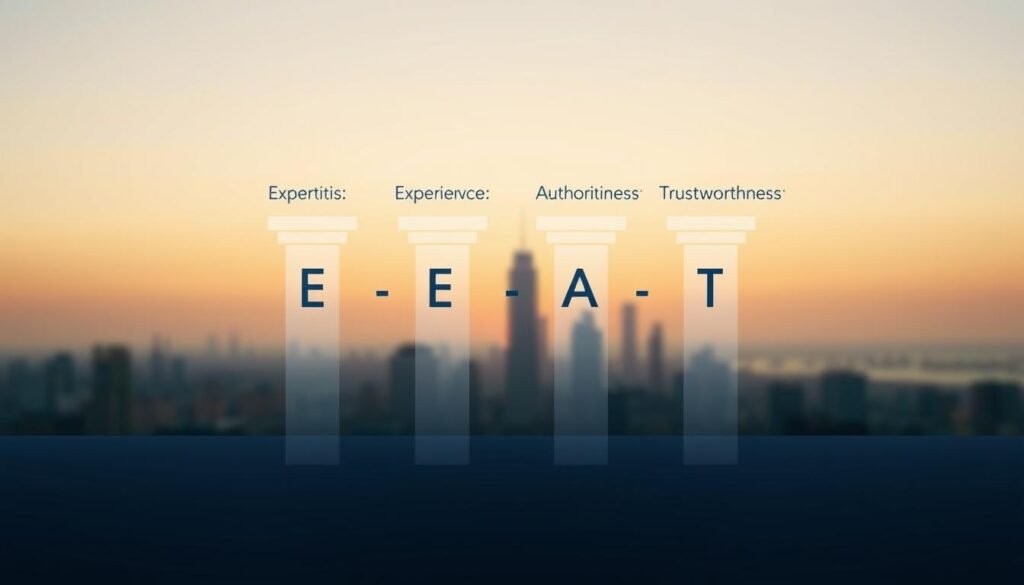
As we approach 2026, the digital landscape is evolving, with Google’s E-E-A-T framework playing a crucial role in content visibility. The concept of E-E-A-T, which stands for Experience, Expertise, Authoritativeness, and Trustworthiness, is becoming increasingly important in determining the quality and relevance of online content.
The Expanded Definition of Experience, Expertise, Authoritativeness, and Trustworthiness
The new E-E-A-T guidelines are expected to place greater emphasis on demonstrable experience alongside traditional signals of expertise. This means content creators will need to showcase practical, first-hand knowledge in their content. For instance, a travel blog about the “Best hill stations near Delhi” will rank higher if written by someone who has personally explored these destinations and can provide personal anecdotes, photos, and practical advice.
The “Experience” component will become increasingly important, with content demonstrating real-world application receiving preferential treatment in search rankings. This shift underscores the value of quality content that is both informative and engaging.
Why E-E-A-T Will Matter More Than Ever
By 2026, Google’s E-E-A-T framework will have evolved to require content creators to show real-world application of their knowledge. Search algorithms will become more adept at evaluating the credentials and background of content creators, looking for consistent signals of expertise across multiple platforms and publications.
- Authoritativeness will extend beyond individual credentials to include institutional reputation and the network of citations and references that support content claims.
- Trustworthiness signals will expand to include transparency about content creation methods, including clear disclosure of AI assistance in content development.
- As misinformation concerns grow, E-E-A-T will serve as Google’s primary framework for determining which content deserves visibility, making compliance essential for maintaining search presence.
Content that fails to demonstrate clear E-E-A-T signals will face increasing challenges in achieving prominent search positions, regardless of technical SEO optimization. Therefore, understanding and implementing E-E-A-T guidelines will be crucial for content creators aiming to maintain or improve their search rankings.
The Intersection of AI Content Detection and E-E-A-T Compliance 2026

The future of content evaluation lies at the intersection of AI detection technology and E-E-A-T compliance, where quality and expertise will be paramount. As AI-generated content becomes increasingly sophisticated, the need for advanced detection systems that can assess not just the origin but also the quality of content will become more critical.
How Detection Systems Will Evaluate Content Quality
By 2026, AI detection systems will not simply identify AI-generated content but will evaluate its quality and compliance with E-E-A-T guidelines through sophisticated analysis algorithms. These systems will assess content based on multiple dimensions, including factual accuracy, information depth, citation quality, and alignment with known expertise patterns. The evaluation process will be multifaceted, ensuring that content meets the required standards of quality and authority.
To illustrate how detection systems will evaluate content quality, consider the following key factors:
- Factual accuracy and up-to-date information
- Depth and comprehensiveness of the content
- Quality of citations and references
- Alignment with established expertise patterns
The Role of Metadata in AI Content Evaluation
Metadata will play a crucial role in content evaluation, with systems analyzing not just the visible content but also the structured data that provides context about authorship, sources, and creation methodology. Content provenance data will become standardized, allowing search engines to trace the origin and development process of content to verify its authenticity and expertise credentials.
The importance of metadata in AI content evaluation can be seen in its three critical functions:
| Function | Description | Benefit |
|---|---|---|
| Establishing Trust | Providing transparency through comprehensive metadata | Increased credibility of content |
| Enabling Regulatory Compliance | Ensuring auditability through detailed metadata | Reduced risk of non-compliance |
| Supporting Scalability | Automating processes with well-structured metadata | Improved efficiency in content management |
As detection systems become more sophisticated, they will increasingly differentiate between acceptable AI-assisted content and problematic fully-automated content. Organizations will need to implement transparent documentation practices that clearly demonstrate how AI tools were used in content creation while highlighting the human expertise that guided the process.
Google’s Evolving Stance on AI-Generated Content
In the rapidly evolving digital landscape, Google’s stance on AI-generated content is becoming increasingly nuanced. As we move towards 2026, it’s clear that Google is refining its approach to content creation, focusing on the quality and relevance of information rather than its origin.
Current Guidelines vs. 2026 Projected Policies
Google’s current guidelines emphasize that AI-generated content is not inherently problematic if it demonstrates high quality, originality, and clear E-E-A-T signals. By 2026, Google is likely to implement more sophisticated policies that address different types of AI assistance in content creation, distinguishing between acceptable augmentation and problematic automation.
For instance, a table comparing current and projected policies might look like this:
| Aspect | Current Guidelines | 2026 Projected Policies |
|---|---|---|
| AI-generated Content | Not inherently problematic if high quality | More sophisticated evaluation of AI assistance |
| E-E-A-T Signals | Emphasized for quality content | Further refined to assess expertise and trustworthiness |
| Transparency | Not explicitly required | Likely to become a recommended or required practice |
The Fine Line Between Helpful and Spammy AI Content
The distinction between helpful and spammy AI content will be defined by factors such as originality, depth of insight, factual accuracy, and clear evidence of human oversight. As John Mueller, a Google Search Advocate, once noted, “The key is not whether content is AI-generated, but whether it provides value to the user.”
“The use of AI in content creation is not the issue; it’s about creating content that is helpful, reliable, and valuable to users.”
By focusing on these aspects, Google aims to promote high-quality content that serves user needs, regardless of how it’s created. As Google continues to evolve its stance, content creators must adapt by prioritizing quality, transparency, and user value.
The Rise of Zero-Click Search and Answer Engine Optimization

The search landscape is on the cusp of a significant transformation with the rise of zero-click searches. As AI-powered search engines increasingly provide direct answers through featured snippets, knowledge panels, and AI overviews, the way users interact with search results is changing dramatically. This shift towards zero-click searches is expected to continue, with Gartner predicting a 25% drop in search traffic by 2026 due to AI chatbots and similar systems.
Impact on Traditional SEO Metrics
Traditional SEO metrics like organic traffic and click-through rates will become less relevant as visibility within AI-generated summaries becomes a primary goal for content creators. The focus will shift from driving traffic to a website to being visible in AI overviews and snippets. This change necessitates a new approach to measuring success, with a greater emphasis on visibility within AI-generated search results.
- Visibility in AI overviews will become a key performance indicator.
- Content will need to be optimized for position zero and AI summaries.
- New measurement frameworks will be required to track brand presence in AI-generated responses.
Strategies for Visibility in AI Overviews and Snippets
To remain visible in this new landscape, content creators will need to adapt their strategies. This includes optimizing for Answer Engine Optimization (AEO) by structuring content to be easily extracted and featured in AI-generated responses. Key strategies will involve:
- Providing clear, concise answers to common questions.
- Utilizing structured data and schema markup to help search engines understand content context.
- Optimizing for voice search by addressing conversational queries and providing succinct, authoritative answers.
By adopting these strategies, content creators can improve their visibility in AI overviews and snippets, ensuring they remain relevant in a rapidly changing search environment.
Key Technical Requirements for AI Content in 2026
In 2026, the landscape of AI content will be shaped by key technical requirements that prioritize machine readability. As AI continues to evolve, the need for structured data and schema markup will become increasingly important. This will enable search engines to better understand and interpret the content, making it more likely to be featured in AI-generated answer results.
Structured Data and Schema Markup Essentials
The importance of schema.org markup cannot be overstated, as it allows search engines to comprehend the context of the content being offered. For instance, applying proper schemas to menu items, prices, and reviews of restaurants can increase their visibility in voice search results for queries like “restaurants with biryani near me under 500 rupees.”
By 2026, technical SEO requirements for AI content will emphasize machine-readable formats. Structured data and schema markup will become non-negotiable elements of content strategy, providing explicit signals about content type, authorship, expertise credentials, and topical relationships.
Content Architecture for AI Crawlability
Content creators will need to implement comprehensive schema markup that identifies not just basic page elements but also expertise signals, content provenance, and citation relationships. Moreover, content architecture will evolve to prioritize clear hierarchical structures with logical heading organization, making it easier for AI systems to extract and summarize key information.
Technical requirements will include enhanced metadata implementation that provides context about content creation methods, sources, and verification processes. Page speed and mobile optimization will remain critical as technical ranking factors, with increased emphasis on how these factors impact AI systems’ ability to efficiently process and evaluate content.
Content designed for AI crawlability will feature clear question-and-answer formats, definitive statements, and well-structured information hierarchies that facilitate accurate information extraction. Implementation of natural language processing (NLP) optimization techniques will help ensure AI systems correctly interpret content meaning and context.
Human-AI Collaboration: The Winning Content Strategy

The future of content creation in 2026 will be characterized by a synergistic approach, combining the strengths of human expertise and AI technology. As AI continues to advance, it’s becoming increasingly clear that the most effective content strategies will leverage the complementary strengths of both human and artificial intelligence.
Leveraging AI as a Tool, Not a Replacement
Leveraging AI as a Tool, Not a Replacement
The key to successful content creation lies in using AI as a powerful tool for research, data analysis, and content optimization, while relying on human creativity, critical thinking, and emotional intelligence to provide unique insights and perspectives. By doing so, content creators can ensure that their work is not only efficient and optimized but also engaging and informative. As “The most valuable content will combine AI’s ability to process vast amounts of information with humans’ ability to provide context, meaning, and original insights.”
To achieve this synergy, organizations will need to develop clear workflows that define appropriate AI use cases in content creation while preserving human involvement in strategic and creative aspects. This collaborative approach will enable content teams to produce high-quality content that resonates with their audience.
Maintaining the Human Touch in AI-Assisted Content
While AI can process vast amounts of data, human oversight remains essential for ensuring factual accuracy, contextual appropriateness, and alignment with brand voice. The human touch in content creation manifests through personal anecdotes, original insights, ethical judgments, and cultural nuances that AI cannot authentically replicate. By maintaining this human element, content creators can produce work that is not only informative but also engaging and relatable.
As content strategies continue to evolve, transparency about the collaborative process between human experts and AI tools will become a best practice. When properly disclosed, this transparency can enhance rather than diminish content credibility. By embracing this human-AI collaboration, content creators can develop a winning strategy that delivers high-quality, engaging content to their audience.
Step-by-Step Guide to Creating E-E-A-T Compliant Content with AI

Developing a step-by-step guide for creating E-E-A-T compliant content with AI is vital for content creators. As AI-generated content becomes increasingly prevalent, ensuring it meets E-E-A-T requirements is crucial for maintaining high-quality content that resonates with audiences and search engines alike.
Planning and Research Phase
The foundation of E-E-A-T compliant content lies in thorough planning and research. This phase involves identifying authoritative sources and subject matter experts who can provide genuine expertise and experience. AI tools can accelerate the research process by analyzing large volumes of information, identifying relevant studies, and suggesting content structures that align with user search intent.
- Define clear content goals and identify target audience needs.
- Gather primary research that demonstrates first-hand experience with the subject matter.
- Use AI to analyze data and suggest content structures.
Content Creation Process
During content creation, AI should be used to augment human expertise rather than replace it. Subject matter experts provide unique insights while AI helps with organization and optimization. The content creation process should incorporate personal experiences, original research, and expert perspectives that demonstrate genuine expertise and authority on the subject.
Review and Enhancement Techniques
A rigorous review process is essential for E-E-A-T compliance, including fact-checking, citation verification, and assessment of content against expertise benchmarks. Enhancement techniques include adding original case studies, expert quotes, proprietary data, and personal anecdotes that strengthen experience signals. Final optimization should focus on readability, engagement, and technical SEO factors while preserving the authentic voice and expertise that distinguishes the content.
- Fact-check and verify citations.
- Assess content against expertise benchmarks.
- Add original case studies and expert quotes to enhance content.
By following this step-by-step guide, content creators can ensure their AI-assisted content meets E-E-A-T standards, providing high-quality, valuable content that resonates with both audiences and search engines.
Advanced Metadata Management for AI Content
Advanced metadata management is emerging as a critical component in the development and deployment of AI content strategies. As AI-generated content becomes more prevalent, the need for sophisticated metadata management systems grows to ensure data quality, integrity, and compliance with evolving regulations.
Implementing Active Metadata Systems
Active metadata systems are revolutionizing the way organizations manage their content by continuously updating information about content quality, usage patterns, and performance metrics. This enables dynamic optimization and governance of content assets, ensuring they remain relevant and effective.
Key benefits of active metadata systems include:
- Improved content personalization
- Enhanced data governance
- Better decision-making through real-time data analysis
Data Lineage and Provenance Documentation
Data lineage documentation tracks the complete journey of information from source to publication, creating an auditable trail that demonstrates content credibility and expertise. Provenance documentation establishes the origin and authority of information sources, strengthening E-E-A-T signals by verifying the credentials of contributing experts and reference materials.
By implementing robust data lineage and provenance documentation, organizations can:
- Ensure compliance with AI regulations
- Enhance the credibility of their content
- Improve transparency about content creation processes
As AI continues to transform the content landscape, advanced metadata management will play a vital role in optimizing content performance, ensuring compliance, and maintaining transparency. Organizations that invest in these systems will be better positioned to leverage AI content effectively and sustainably.
Measuring Content Quality: Metrics and KPIs for 2026
Content quality measurement is on the cusp of a revolution as we head into 2026. The way we assess content quality is evolving beyond traditional metrics to incorporate more sophisticated indicators that evaluate expertise, experience, authoritativeness, and trustworthiness.
Beyond Traditional Engagement Metrics
Traditional engagement metrics such as time on page and bounce rate will be supplemented with more nuanced measurements. These include information satisfaction scores, expertise perception ratings, and trust indicators that provide a more comprehensive view of content performance.
New content quality frameworks will assess not just how users interact with content, but how effectively it demonstrates subject matter expertise and provides valuable information. This shift is crucial for creating content that resonates with audiences and meets their expectations.
AI-Specific Performance Indicators
AI-specific performance indicators will track how content performs in AI-generated summaries, featured snippets, and voice search results. These areas are becoming increasingly important for visibility and will be critical in determining content success.
Content quality scoring systems will analyze citation patterns, reference quality, and information accuracy to provide objective measures of content authority and trustworthiness. By implementing these advanced metrics, organizations can gain a more accurate picture of their content’s performance and make data-driven decisions.
To achieve this, organizations will need to implement integrated measurement frameworks that combine traditional SEO metrics with E-E-A-T indicators and AI visibility metrics. This holistic approach will enable them to evaluate content quality comprehensively and stay ahead in the competitive landscape.
Avoiding Common Pitfalls in AI Content Creation
With AI-generated content on the rise, understanding the red flags that trigger AI detection is essential for maintaining search visibility. As AI content detection systems become more sophisticated, content creators must be vigilant about the quality and characteristics of their content.
Red Flags That Trigger AI Content Detection
AI content detection systems are designed to flag content that lacks authenticity, originality, or factual accuracy. Some common red flags include:
- Unnatural language consistency, which can indicate overly uniform or robotic content
- Generic perspectives that fail to provide unique insights or viewpoints
- Lack of specific examples or anecdotes that support the content’s claims
- Absence of personal voice or experience, making the content seem impersonal or unauthentic
- Over-optimization for search engines rather than user value
To avoid these red flags, content creators should focus on producing high-quality, engaging content that provides genuine value to users. This can be achieved by incorporating genuine expertise, maintaining a consistent brand voice, and ensuring that the content is well-researched and accurate.
Ethical Considerations and Transparency Requirements
As AI content creation becomes more prevalent, ethical considerations and transparency requirements are becoming increasingly important. Content creators must ensure that their use of AI is transparent and that they are not misrepresenting the origin of their content. This includes:
- Proper attribution of sources to maintain credibility and trustworthiness
- Clear disclosure of AI involvement in content creation, particularly for sensitive or YMYL (Your Money Your Life) content
- Ensuring factual accuracy and fairness in information presentation to avoid misinformation
By 2026, transparency requirements are likely to become even more stringent, with a focus on clear disclosure and accountability in AI-assisted content creation. Organizations should implement editorial guidelines that define appropriate AI use cases, required human oversight processes, and quality standards for AI-assisted content.
Industry-Specific E-E-A-T Requirements in 2026
As we approach 2026, industry-specific E-E-A-T requirements are becoming increasingly crucial for content creators. The need for high-quality, trustworthy content is driving the development of specialized standards across various sectors.
Different industries will have unique E-E-A-T requirements. For instance, content related to Your Money Your Life (YMYL) topics will face stringent guidelines.
YMYL Content Standards
YMYL content, which includes topics related to health, finance, safety, and major life decisions, will require formal credentials and professional experience. Financial content, for example, will need to demonstrate expertise through professional certifications and regulatory compliance documentation.
E-commerce and Product Review Guidelines
E-commerce and product review content will be subject to verification of actual product testing experience and transparent disclosure of testing methodologies. Clear policies regarding affiliate relationships and sponsorships will also be necessary.
Educational and Informational Content Benchmarks
Educational content will be evaluated against academic standards, with an emphasis on curriculum alignment, pedagogical expertise, and accurate representation of scientific consensus on controversial topics. Industry-specific benchmarks will emerge for technical fields, requiring professional credentials and demonstrated practical application.
Organizations will need to develop specialized content teams with verifiable expertise in their industry verticals. This shift towards industry-specific E-E-A-T compliance will ensure that content is not only of high quality but also trustworthy and relevant to the target audience.
Global SEO Considerations for AI Content
The future of AI content lies in understanding the intricacies of global SEO in 2026. As AI-generated content becomes more prevalent, businesses must adapt their SEO strategies to cater to diverse global audiences. This involves more than just translating content; it requires a deep understanding of cultural nuances, regional search behaviors, and market-specific E-E-A-T signals.
Cultural and Regional Adaptations
Cultural adaptations are crucial for successful global SEO. AI content strategies must recognize that expertise is often culturally defined, with different credentials and experience types carrying varying weight in different regions. For instance, a medical expert in one country may not be considered an authority in another due to differences in medical practices or regulations.
Regional adaptations will include customizing content to address local search behaviors, question formats, and information expectations while maintaining consistent brand messaging. This might involve using region-specific keywords, adjusting the tone to suit local preferences, and ensuring that content is accessible and relevant to the target audience.
Multilingual AI Content Optimization
Multilingual AI content optimization will leverage advanced natural language processing to ensure translations preserve not just linguistic accuracy but also cultural relevance and search intent alignment. This means going beyond literal translation to understand the context and nuances of the original content.
To achieve this, organizations will need to implement global content governance frameworks that balance centralized quality standards with localized expertise and cultural adaptation. Successful global SEO strategies will incorporate local subject matter experts who can validate content for cultural appropriateness, regional authority signals, and market-specific expertise indicators.
Conclusion: Preparing Your Content Strategy for 2026 and Beyond
The year 2026 promises to bring about a new paradigm in content creation, where AI capabilities and E-E-A-T compliance converge to redefine the standards of quality and authority in digital content. As we look toward this future, it’s essential for organizations to adapt their content strategies to address the dual challenges of increasingly sophisticated AI content detection and more stringent E-E-A-T compliance requirements.
Organizations that succeed will be those that view these developments not as obstacles but as opportunities to elevate content quality and demonstrate genuine expertise and value to their audiences. Preparing for this future requires investment in both human capital—subject matter experts, experienced content creators, and knowledgeable editors—and technological infrastructure that supports content quality and compliance.
Successful content strategies will balance efficiency and scale with authenticity and expertise, using AI as a powerful tool while preserving the human elements that drive true authority and trust. To achieve this, organizations should begin implementing more rigorous content governance frameworks now, establishing clear guidelines for AI usage, expertise documentation, and quality standards.
As search continues to evolve toward more sophisticated understanding of content quality and authority, the fundamental principles of creating valuable, expert-driven content will remain the surest path to sustainable SEO visibility and audience trust. The future belongs to content creators who can harness the efficiency of AI while maintaining the authenticity, expertise, and human insight that technology alone cannot provide.
In 2026, the organizations that succeed with AI will be those that treat metadata as central to their strategy. Mature metadata capabilities enable faster AI development, stronger compliance, and greater trust in decisions. Now is the time to invest in active metadata systems, governance, and stewardship to ensure success in the evolving digital landscape.