The way people search for information is undergoing a dramatic shift. With the rise of AI-powered platforms like Google Overviews, Perplexity, and Gemini, users are getting curated answers instead of just a list of links. The question is: how do you ensure your site gets included in these AI summaries? The answer lies in structured data.
As AI-driven search becomes the norm, having the right schema markup is crucial for visibility. This comprehensive guide will explore how to leverage structured data to improve your content’s authority and relevance in the AI search landscape of 2026.
Key Takeaways
- Understand the evolving landscape of AI-powered search platforms.
- Learn why schema markup is essential for visibility in AI search results.
- Discover strategies for implementing effective schema markup.
- Improve your content’s authority and relevance in AI-driven search.
- Stay ahead of the competition with the latest optimization techniques.
The Evolution of Search: From Keywords to AI Understanding
As we step into the future of digital discovery, the landscape of search is undergoing a significant transformation. The way people interact with search engines is changing, driven by advancements in artificial intelligence (AI) and a shift towards more natural, conversational queries.
The Rise of AI-Powered Search Platforms
AI-powered search platforms are becoming increasingly prevalent, offering users a more intuitive and personalized search experience. These platforms use complex algorithms to understand the context and intent behind a user’s query, providing more accurate and relevant results.
The growth of AI-powered search is evident in the way users are adapting to more conversational and detailed queries. Statistics show that searches containing five or more words grew 1.5 times faster than shorter queries in 2023-2024, reflecting users’ comfort with natural language interactions.
How AI Search Differs from Traditional Search
AI search differs significantly from traditional search in its ability to understand and process complex queries. Unlike traditional search, which relies heavily on keyword matching, AI search uses natural language processing (NLP) to comprehend the nuances of human language.
This shift means that users can now ask fully-formed, detailed questions and receive direct answers rather than lists of links. For instance, AI-enabled chat interactions tend to last 66% longer than traditional searches, with users engaging in multi-turn conversations rather than isolated queries.
| Search Type | Characteristics | User Interaction |
|---|---|---|
| Traditional Search | Keyword-based, list of links | Isolated queries |
| AI Search | Natural language processing, direct answers | Multi-turn conversations |
The Impact of AI Search on User Behavior
The rise of AI search is significantly impacting user behavior, with users expecting more direct and relevant results. As a result, businesses must adapt their content strategies to match these new interaction patterns, focusing on answering specific questions comprehensively rather than optimizing for short keywords.
The shift in user behavior also means that content creators need to prioritize content quality and relevance, ensuring that their content provides value to the user. By doing so, they can improve user engagement and enhance the overall search experience.
As AI continues to evolve, understanding its impact on search and user behavior will be crucial for businesses looking to stay ahead in the digital landscape.
Understanding Schema Markup for AI Search 2026

As AI continues to transform the search landscape, understanding schema markup becomes crucial for optimizing content visibility in 2026. Schema markup acts as a bridge between the content created by humans and the AI systems that interpret it. By providing additional context to search engines, schema markup helps AI understand the nuances of the content, including its logic, storyline, and relationships between different entities.
What is Schema Markup?
Schema markup is a form of microdata that is added to a website’s HTML to provide search engines with more information about the content on a particular page. It helps AI systems disambiguate content, distinguishing between entities like “Apple” the company and “Apple” the fruit. By doing so, schema markup removes ambiguity and ensures that AI systems interpret the content correctly.
Schema markup also connects entities, helping AI link the page to larger knowledge graphs. This connection enhances the presentation of the content in search results, making it more likely to appear in AI-generated answers, reviews, FAQs, and ratings.
The Role of Schema.org in Structured Data
Schema.org is a collaborative project between major search engines like Google, Bing, and Yahoo, aimed at creating a common vocabulary for structured data markup. It provides a comprehensive list of schema types that can be used to markup different types of content, from articles and products to events and reviews.
By using schema.org vocabulary, content creators can ensure that their schema markup is consistent and easily understood by AI systems. This consistency is crucial for the effective interpretation of schema markup and its integration into knowledge graphs.
How AI Systems Interpret Schema Markup
AI systems in 2026 use sophisticated algorithms to interpret schema markup, extracting meaning and relationships from structured data. When encountering schema markup, these systems can identify the specific type of content and its key attributes without having to infer this information.
The precision of schema markup allows AI systems to extract specific data points for direct answers, featured snippets, and AI-generated summaries. By connecting schema-marked entities to larger knowledge graphs, AI search systems place the content within the broader context of related information across the web.
Why Schema Markup Matters More Than Ever
As we move into 2026, the importance of schema markup is becoming increasingly evident in the ever-evolving landscape of AI-driven search. The way we interact with search engines is changing, and schema markup is at the forefront of this transformation.
With the rise of AI-powered search platforms, the way we optimize our content is shifting from traditional keyword-based strategies to more sophisticated methods that incorporate structured data. Schema markup plays a crucial role in this new landscape, enabling search engines to understand the context and relevance of our content more accurately.
The Shift from Rankings to Citations
The traditional focus on search engine rankings is giving way to a new paradigm: citations. As AI-driven search becomes more prevalent, being cited or referenced by authoritative sources is becoming increasingly important. Schema markup helps facilitate this by providing search engines with clear, structured information about our content.
This shift towards citations emphasizes the need for high-quality, relevant content that is easily discoverable by AI systems. By implementing schema markup, we can improve our content’s visibility and increase its chances of being cited by other reputable sources.
AI Overviews and Direct Answers
AI-powered search engines are increasingly providing direct answers to user queries, often in the form of overviews or featured snippets. Schema markup is essential for securing these coveted positions, as it helps search engines understand the structure and relevance of our content.
By using schema markup, we can increase the likelihood of our content being featured in these AI-generated overviews, thereby improving our visibility and driving more traffic to our websites.
Voice Search Optimization Through Schema
Voice search has become a dominant method of querying search engines, with over 55% of households using voice-activated devices for daily information queries. Schema markup plays a crucial role in voice search optimization, as voice assistants preferentially pull answers from content with clear structured data.
To optimize for voice search, we need to focus on conversational language patterns and natural question formats that match how people actually speak. Using schema markup, particularly FAQ and HowTo schemas, can significantly improve our content’s visibility in voice search results.
| Schema Type | Voice Search Benefit | Example Use Case |
|---|---|---|
| FAQ Schema | Mirrors question-and-answer format of voice queries | Frequently Asked Questions page |
| HowTo Schema | Provides step-by-step instructions for complex tasks | Recipe or tutorial content |
| LocalBusiness Schema | Enhances local search visibility for voice queries | Business listing or directory page |
By leveraging schema markup and focusing on conversational language patterns, we can improve our content’s visibility and relevance in the rapidly evolving landscape of AI-driven search.
Building Content Authority with Schema Markup

As AI search continues to evolve, building content authority has become crucial for businesses aiming to establish trust and credibility online. In 2026, the importance of schema markup in this process cannot be overstated. By implementing schema effectively, businesses can significantly enhance their content’s visibility and authority in AI-driven search results.
Schema markup plays a vital role in helping AI systems understand the context and credibility of content. This is particularly important in an era where 84% of US users cite concerns about AI hallucinations, making verifiable information a top priority for AI platforms.
Establishing E-E-A-T Signals Through Schema
Establishing E-E-A-T (Experience, Expertise, Authoritativeness, Trustworthiness) signals is crucial for content authority. Schema markup can help by providing structured data that highlights a website’s or author’s credentials. For instance, using Author Schema can help AI systems recognize the expertise behind the content.
- Use Author Schema to highlight author credentials and expertise.
- Implement Organization Schema to establish the credibility of the publishing entity.
- Utilize Review Schema to showcase customer feedback and ratings.
Author and Organization Schema for Credibility
Author and Organization Schema are essential for establishing credibility in AI search results. By providing clear information about the author and the organization behind the content, businesses can enhance their authority. For example, using Organization Schema can help AI systems understand the structure and reputation of the organization.
Using Schema to Highlight Original Research and Data
Original research and proprietary data have become premium content assets in 2026. Schema markup allows businesses to clearly identify and highlight original research, studies, surveys, and data points within their content. The Dataset Schema has evolved to become particularly valuable for businesses publishing original research.
- Use Dataset Schema to specify methodology, sample size, and data collection methods.
- Highlight original research and data to improve AI search visibility.
- Position your brand as an authoritative industry voice by showcasing unique data and research findings.
By implementing schema markup effectively, businesses can not only improve their AI search visibility but also establish themselves as authorities in their industry. As AI continues to shape the search landscape, the importance of building content authority through schema markup will only continue to grow.
Essential Schema Types for AI Search Visibility
With AI-driven search on the rise, certain schema types are emerging as key to online visibility. As search engines become more sophisticated, the way we optimize our content must also evolve. Schema markup plays a crucial role in this evolution, helping search engines understand the context and relevance of our content.
FAQ Schema: The AI Search Powerhouse
FAQ schema has become a critical component for AI search visibility. By structuring FAQs properly, websites can significantly improve their chances of being featured in AI-generated search results.
HowTo Schema: Capturing Step-by-Step Queries
HowTo schema is another vital schema type that captures step-by-step queries, making it easier for AI search engines to provide users with relevant instructional content.
Article and BlogPosting Schema: Content Context
Article and BlogPosting schema types are foundational for establishing content context and credibility in AI search systems. These schema types allow you to clearly communicate critical metadata like publication date, modification date, author information, and estimated reading time.
Properly implemented Article schema includes elements that signal E-E-A-T factors, such as author credentials and editorial processes. Research shows that news and informational content with Article schema receives 34% more visibility in AI-generated responses compared to unstructured content.
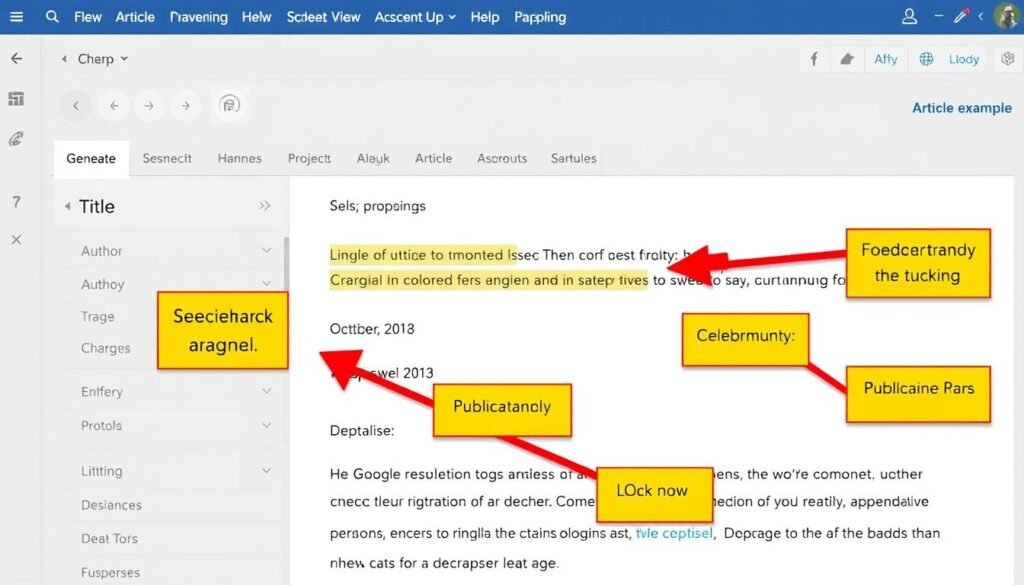
By leveraging these essential schema types, content creators can significantly enhance their content’s visibility in AI-driven search results. As AI continues to shape the search landscape, staying ahead of the curve with the right schema markup strategies will be crucial for online success.
Product and Review Schema for E-commerce Success
E-commerce businesses are increasingly relying on schema markup to enhance their product visibility in AI-driven search results. As consumers continue to shift towards voice search and AI-powered shopping assistants, having the right schema markup in place has become crucial for online retailers.
Product Schema: Essential Elements for AI Visibility
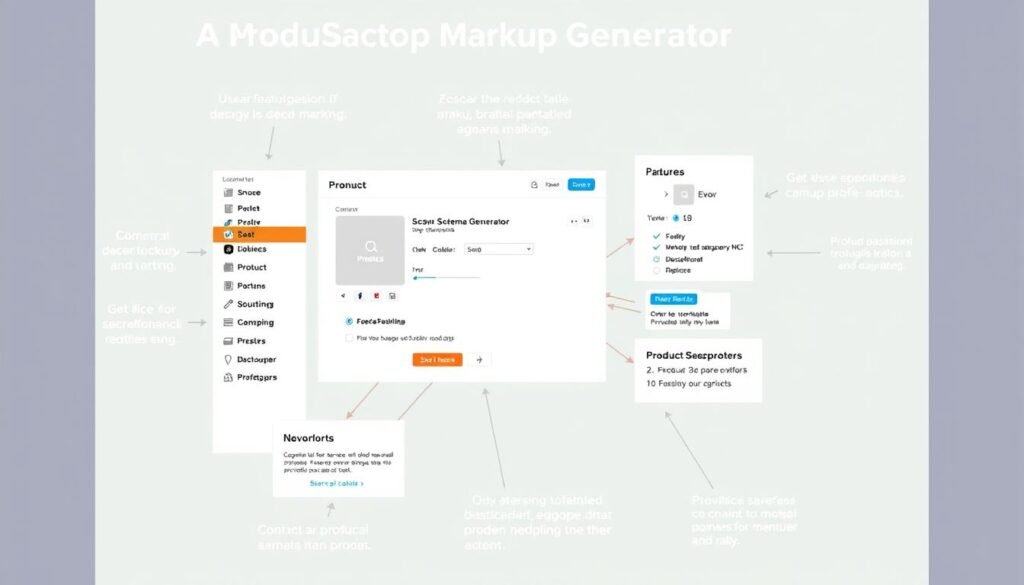
Product schema markup is vital for providing AI systems with detailed product information, including price, availability, and reviews. By implementing product schema, e-commerce businesses can improve their product’s visibility in search results and provide users with a better shopping experience.
To maximize the effectiveness of product schema, it’s essential to include key elements such as product name, description, image, price, and availability. Additionally, using schema markup generators can simplify the process of creating and implementing product schema.
Review Schema: Building Trust Signals
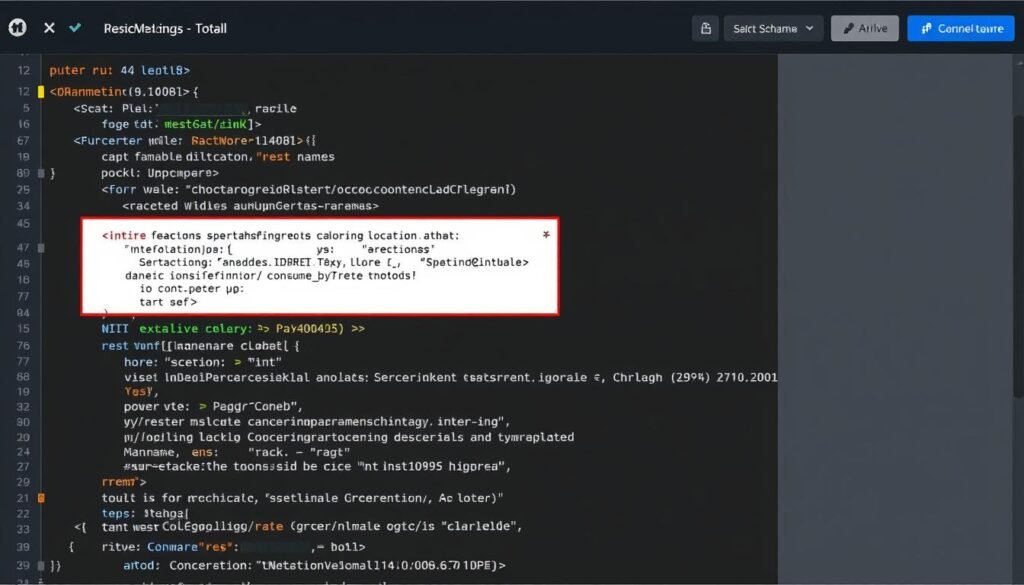
Review schema markup plays a critical role in building trust with potential customers by showcasing product reviews and ratings. By implementing review schema, e-commerce businesses can increase customer confidence in their products and drive sales.
To implement review schema effectively, businesses should ensure that their review data is accurate, up-to-date, and compliant with schema.org guidelines. This can involve using review schema markup generators and validators to streamline the process.
Aggregate Rating Schema: Showcasing Customer Sentiment
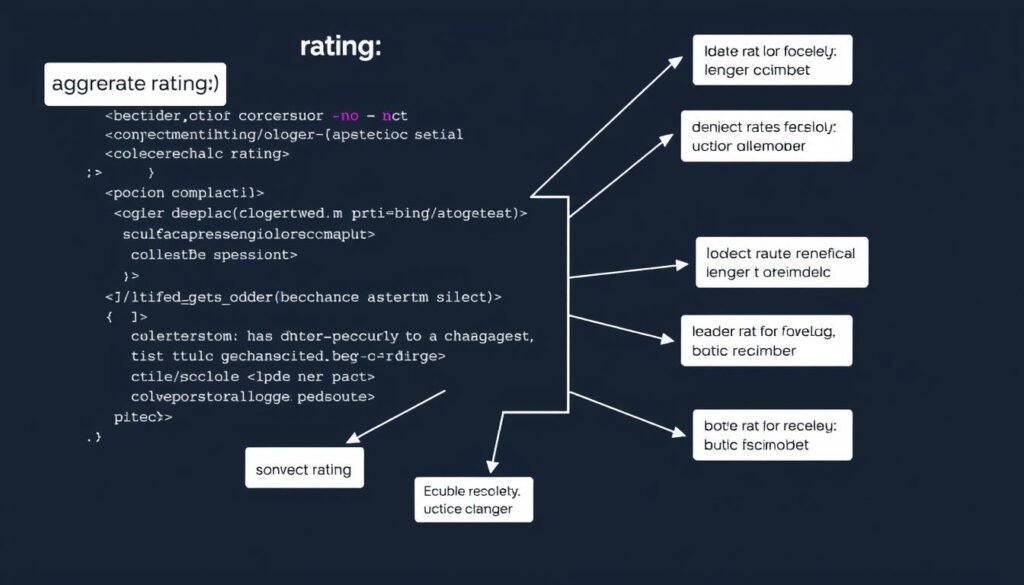
Aggregate rating schema is a powerful tool for e-commerce businesses, allowing them to showcase overall customer sentiment through numerical ratings, review counts, and rating distributions. By implementing aggregate rating schema, businesses can provide AI systems with valuable data to determine product quality and trustworthiness.
The benefits of aggregate rating schema include increased visibility in AI shopping recommendations, improved customer trust, and enhanced product credibility. Research has shown that products with aggregate rating schema displaying 4+ stars receive 52% more visibility in AI shopping recommendations than unrated alternatives.
Key benefits of Aggregate Rating Schema:
- Showcases overall customer sentiment at a glance
- Communicates collective customer opinion through numerical ratings and review counts
- Helps AI search systems evaluate product quality quickly
- Increases visibility in AI shopping recommendations
- Improves customer trust and product credibility
Local Business Schema: Dominating Regional AI Search
With voice-based local queries on the rise, businesses need to focus on implementing LocalBusiness schema to dominate regional AI search results. As AI continues to transform how people find local businesses, having the right schema markup becomes crucial for visibility.
Components for AI Recognition
To effectively implement LocalBusiness schema, several key components must be included. These components help AI systems understand and recognize the business’s online presence.
- Business Name and Address: Clearly define the business name and address to help AI systems map the business location.
- Contact Information: Include phone numbers and email addresses to facilitate communication.
- Business Hours: Specify operating hours to inform customers and AI assistants.
- Service Area: Define the geographic area served by the business.
Service Area and GeoCoordinates Implementation
Implementing service area and geocoordinates is critical for local businesses to be recognized by AI systems. This involves specifying the exact geographic coordinates and the area served by the business.
By accurately defining these elements, businesses can improve their visibility in local search results and provide AI assistants with the necessary information to answer user queries.
Optimizing for Voice-Based Local Queries
Voice-based local queries have become a dominant search method, with over 60% of local searches conducted through voice interfaces. To optimize for these queries, businesses must implement conversational FAQ schema that mirrors how people naturally ask about local businesses.
AI voice systems prioritize businesses that provide clear structured data about hours, services, accessibility features, and parking information. By focusing on these elements, local businesses can significantly improve their chances of being featured in voice search results.
Advanced Schema Strategies for 2026
To stay ahead in AI search, understanding and implementing advanced schema strategies is essential. As AI continues to evolve, the way we approach schema markup must also advance to maximize visibility and accuracy.
Schema Stacking: Combining Multiple Schema Types
Schema stacking involves combining multiple schema types to provide a more comprehensive understanding of your content to AI systems. This approach allows for a richer representation of your data, enhancing its visibility in search results.
For instance, combining Product and Review schema can provide both detailed product information and customer feedback, making your content more attractive to potential customers.
Multi-Layered Schema Implementation
Implementing schema in a multi-layered manner means applying different schema types across various pages and content types on your website. This strategy ensures that all your content is optimized for AI search, regardless of whether it’s a product page, blog post, or service description.
By doing so, you create a cohesive and structured data environment that AI systems can easily navigate and understand.
Dynamic Schema Generation for Large Websites
Dynamic schema generation has become essential for large websites in 2026, allowing automated implementation across thousands of pages. This approach involves creating systems that automatically generate appropriate schema markup based on content type, template, and database information.
- Auto-generate schema from your CMS or database using plugins like Yoast or RankMath, or through custom development.
- Use your CMS or a tag manager to auto-generate schema based on page content, such as product inventory updates or new blog posts.
- Enterprise-level websites utilize API-driven schema generation that pulls real-time data from inventory systems, CRMs, and content management systems.
Dynamic schema ensures consistency and accuracy across large sites while reducing the manual workload associated with structured data implementation. Advanced implementations include conditional schema generation that adapts based on content attributes, user location, or product availability.
Schema Markup Tools and Resources
As AI search continues to evolve, the right schema markup tools become essential for optimizing your website’s visibility. The complexity of schema markup implementation requires a range of tools to ensure accuracy and effectiveness.
Schema Generators and Validators
Schema generators simplify the process of creating schema markup, while validators ensure that the markup is correct and compliant with the latest standards. For 2026, some of the best schema markup generators include:

CMS Plugins for Schema Implementation
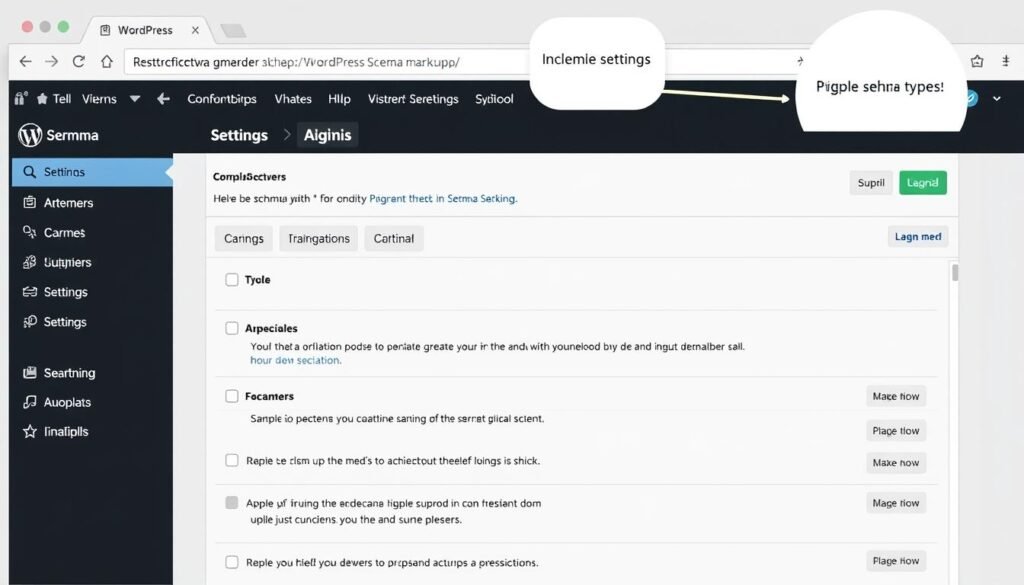
For websites built on Content Management Systems (CMS) like WordPress, plugins can greatly simplify schema markup implementation. Popular WordPress schema markup plugins offer user-friendly interfaces for adding schema to your content.
Testing Tools for Schema Effectiveness
Testing tools are crucial for ensuring that your schema markup is effective and properly interpreted by AI search systems. Tools like Google’s Rich Results Test and Schema Validator are essential for checking schema implementation.
Advanced testing tools now offer features such as AI visibility prediction, competitive analysis, and continuous monitoring of schema health across large websites.

By leveraging these schema markup tools and resources, you can improve your website’s visibility in AI search results and stay ahead of the competition.
Structuring Content for AI Systems

The rise of AI-powered search platforms demands a new approach to content structure, one that prioritizes clarity and machine readability. As we move into 2026, it’s crucial for content creators to understand how to optimize their work for AI systems.
Creating AI-Friendly Content Structure
Creating an AI-friendly content structure involves organizing information in a way that’s easily digestible by machine learning algorithms. This means using clear headings, concise paragraphs, and relevant subheadings to break up the content. By doing so, content creators can improve the visibility of their work in AI-driven search results.
Effective content structure also involves using a logical hierarchy of information. This can be achieved by using proper heading tags (H1, H2, H3, etc.) to denote the importance of different sections within the content. Such a structure helps AI systems understand the context and relevance of the information presented.
Using Headings and Lists for AI Scanning
AI systems often rely on headings and lists to quickly scan and understand the content of a webpage. By using descriptive headings and breaking up complex information into bullet points or numbered lists, content creators can make their work more accessible to these systems. This not only improves the user experience but also increases the likelihood of the content being cited in AI-generated responses.
For instance, using lists to present data or steps in a process makes it easier for AI to extract and reference this information. Similarly, headings help AI systems to identify the main topics covered in the content, allowing for more accurate indexing and retrieval.
Crafting Standalone Quotable Statements
Standalone quotable statements have become a strategic content element in 2026, designed to increase the likelihood of AI citations. These statements present key facts, statistics, insights, or conclusions in self-contained formats that can be extracted and cited without losing context. Effective quotable statements include specific data points, clear attribution, and concise phrasing that AI systems can easily incorporate into generated answers.
Research shows that content with well-crafted quotable statements receives up to 64% more citations in AI-generated responses. By strategically placing these statements throughout the content, creators can significantly increase their visibility to AI scanning systems and improve their chances of being cited.
To maximize the impact, it’s essential to present data and insights in a clear and concise manner. For example, instead of burying statistics in dense paragraphs, showcasing them clearly: “Rakuten found that users spent 1.5 times longer on pages with structured data, and AMP pages with search features had 3.6 times higher engagement.” This format makes it easier for AI systems to identify and cite valuable information.
Matching User Intent with Schema-Enhanced Content

As AI search continues to evolve, understanding user intent has become crucial for effective schema markup implementation. The way users interact with search engines has changed significantly, with more natural language queries and complex questions being asked.
Understanding natural language queries is at the heart of AI search. Unlike traditional keyword-based searches, AI-powered search engines can comprehend the context and intent behind a user’s query. This shift requires content creators to think beyond just keyword density and focus on creating content that directly answers user questions.
Understanding Natural Language Queries in AI Search
Natural language queries have become the norm in AI search. Users are now more likely to ask full questions or provide detailed descriptions when searching for information. For instance, instead of searching for “best Italian restaurants,” a user might ask, “What are the top-rated Italian restaurants in New York City that are open on Sundays?” This change in search behavior necessitates a more nuanced approach to content creation.
Key characteristics of natural language queries include:
- Full sentences or questions
- Specificity and context
- Conversational tone
Context Over Keywords: The AI Approach
AI search engines prioritize context over keywords. This means that content needs to be structured in a way that provides clear, concise answers to user queries. The focus should be on creating comprehensive content that addresses the user’s intent, rather than just including specific keywords.
Aligning Schema with User Questions
Aligning schema markup with user questions is critical for visibility in AI search results. By using schema types like FAQ and HowTo, content creators can directly address common user queries, increasing the likelihood of their content being cited in AI-generated answers.
| Schema Type | User Query | Content Benefit |
|---|---|---|
| FAQ | Frequently Asked Questions | Increased visibility in AI search results |
| HowTo | Step-by-step instructions | Better structured content for complex queries |
| Review | Product or service evaluations | Enhanced trust signals for users |
By understanding user intent and aligning schema markup accordingly, content creators can significantly improve their visibility in AI search results. This approach not only enhances the user experience but also provides a competitive edge in the ever-evolving landscape of search engine optimization.
Tracking AI Search Performance
Measuring the impact of AI search on business outcomes requires specialized tracking methods. As AI continues to transform the search landscape, understanding how to effectively monitor and analyze AI search performance has become essential for businesses aiming to stay competitive.
Generative Engine Optimization (GEO) Metrics
Generative Engine Optimization (GEO) metrics represent a new frontier in measuring AI search performance. These metrics go beyond traditional SEO KPIs to capture how content is being used and referenced within AI-generated responses. Key GEO metrics include citation rates, contextual relevance scores, and generative engagement rates.
To effectively track GEO metrics, businesses need to leverage advanced analytics tools that can monitor AI-driven interactions. This involves not just tracking rankings, but understanding how AI systems are interpreting and utilizing content.
Tools for Monitoring AI Citations and Mentions
Monitoring AI citations and mentions requires specialized tools that can track references across various AI platforms. These tools help businesses understand their visibility within AI-generated content and identify opportunities for improvement.

Effective citation tracking involves analyzing both the quantity and quality of AI citations, as well as understanding the context in which they appear.
Measuring Schema Impact on AI Search Visibility
Measuring the impact of schema markup on AI search visibility has become a critical analytics function. This involves comparing performance between pages with and without schema implementation to isolate its effect.
Key metrics for measuring schema impact include click-through rates, citation rates, and engagement metrics. By analyzing these metrics, businesses can refine their schema strategies to maximize AI visibility.
Key considerations for measuring schema impact:
- Comparing citation rates between schema-enhanced and plain pages
- A/B testing different schema types and implementations
- Tracking changes in citation patterns and sentiment
- Analyzing schema ROI based on visibility improvements and conversion rates
By focusing on these metrics and approaches, businesses can gain a clearer understanding of how schema markup influences their AI search performance and make data-driven decisions to enhance their visibility.
Common Schema Markup Mistakes to Avoid
Schema markup plays a critical role in AI search, but several common mistakes can hinder its effectiveness. As search engines continue to evolve, proper schema implementation becomes increasingly crucial for online visibility and eligibility for AI features.
One of the most significant errors is overloading pages with irrelevant schema. This not only dilutes the effectiveness of the markup but can also lead to penalties from search engines for attempting to manipulate rankings.
Overloading Pages with Irrelevant Schema
Implementing too many schema types on a single page can confuse search engines and dilute the signal they’re trying to convey. It’s essential to focus on the most relevant schema types that directly relate to the content on that page.
For instance, a product page should primarily use Product schema, while a blog post might benefit more from Article or BlogPosting schema. Using too many schema types can make it harder for AI systems to identify the primary topic of the page.
Using Incorrect Schema Types
Using the wrong schema type for your content can lead to misinterpretation by AI systems. For example, using Event schema for a non-event page can confuse search engines about the nature of your content.
It’s crucial to understand the different schema types available and apply them correctly. Regular audits can help identify and correct such mistakes, ensuring that your structured data accurately represents your content.
Neglecting Schema Updates and Maintenance
Neglecting schema updates and maintenance has become a significant visibility risk in 2026. As Schema.org vocabulary continues to evolve, outdated schema implementations may use deprecated properties or miss new properties that have become important signals for AI search systems.
To avoid this, it’s recommended to establish regular schema audit cycles, at least quarterly, to identify and update outdated implementations. Automated schema monitoring tools have become essential for detecting deprecated properties, missing required fields, and opportunities to implement new schema enhancements.
By avoiding these common mistakes and maintaining up-to-date schema markup on your pages, you can improve your website’s visibility in AI-driven search results and reduce the risk of being overlooked due to implementation mistakes.
Regional and Multilingual Schema Considerations
With AI search on the rise, regional and multilingual schema considerations are emerging as key factors for businesses seeking to optimize their online visibility. As search engines become more sophisticated, they are better able to understand and cater to regional nuances and linguistic differences.
Regional businesses that provide essential signals about their location, services, and contact details can significantly improve their visibility in local packs and maps, particularly in markets like the UAE and KSA. To achieve this, it’s crucial to implement schema markup that is tailored to regional and multilingual contexts.
Language-Specific Schema Properties
One of the key aspects of regional and multilingual schema considerations is the use of language-specific schema properties. This involves adapting schema markup to accommodate different languages and regional preferences. For instance, businesses can use the name and description properties in their schema markup to provide information in multiple languages, thereby enhancing their visibility in search results for different linguistic audiences.
- Use language-specific properties to cater to diverse linguistic audiences.
- Implement schema markup that reflects regional business practices and cultural preferences.
- Utilize properties like openingHours to reflect regional business schedules.
Geo-Targeting Through Schema Markup
Geo-targeting is another critical aspect of regional schema considerations. By incorporating geo-targeting elements into their schema markup, businesses can improve their visibility in local search results. This includes using properties like geo, latitude, and longitude to provide precise location information.
Effective geo-targeting through schema markup enables businesses to reach their target audience more effectively, particularly in local search queries. For example, a business operating in multiple regions can use schema markup to specify its location and service areas, making it more discoverable for local customers.
Cultural Context in Schema Implementation
Cultural context plays a significant role in schema implementation, as it directly impacts how businesses are perceived by their target audience. Cultural context in schema implementation has emerged as a competitive advantage for global businesses in 2026, going beyond basic language and location signals.
Effective implementation involves adapting schema to reflect regional business practices, cultural preferences, and local consumer expectations. This includes customizing properties like priceRange to match local currency conventions and paymentAccepted to highlight regionally preferred payment methods.
- Cultural context in schema implementation enhances business credibility.
- Research shows that culturally-adapted schema implementations increase engagement rates by up to 27% compared to generic global implementations.
- AI search systems increasingly recognize and reward schema implementations that accurately reflect cultural nuances and regional business practices.
By understanding and implementing regional and multilingual schema considerations, businesses can significantly enhance their online visibility and reach their target audience more effectively in diverse markets.
Future Trends in Schema Markup for AI Search
The integration of schema markup with emerging AI technologies is set to redefine search engine optimization. As we look towards 2026 and beyond, it’s clear that schema markup will play a crucial role in how AI systems understand and interpret web content. The future of search is not just about keywords; it’s about creating a web of interconnected data that AI can navigate with ease.
One of the most significant developments in this area is the emergence of new schema types designed to support new technologies. These emerging schema types will help webmasters provide more context to AI systems, enabling them to better understand complex data structures.
Emerging Schema Types for New Technologies
As new technologies emerge, so too will new schema types to support them. For instance, schema types for virtual and augmented reality experiences, or for IoT devices, will become increasingly important. These schema types will help search engines understand the context and functionality of these new technologies, making them more discoverable to users.
Developers are working on creating AI-ready schema developments that can be easily integrated into existing websites. This includes schema markup that is dynamically generated based on the content of the page, reducing the need for manual updates and ensuring that the schema remains relevant and accurate.
AI-Ready Schema Developments
AI-ready schema developments are focused on making schema markup more adaptable and responsive to changing content. This involves using machine learning algorithms to automatically generate and update schema markup based on the content of the webpage. Such advancements will make it easier for businesses to maintain their schema markup, even as their content evolves.
The integration of schema with knowledge graphs represents a significant shift in how we approach structured data. By connecting schema markup to broader entity relationships across the web, businesses can establish a clearer context for their content, making it more relevant to AI-driven search queries.
The Integration of Schema with Knowledge Graphs
The integration of schema with knowledge graphs is perhaps one of the most exciting developments in the field of structured data. This integration allows businesses to explicitly connect their content to broader entity relationships that exist across the web, establishing clear context and relevance. Advanced implementations use entity identifiers to link schema-marked entities to established knowledge graph entries, reinforcing entity recognition.
- AI search systems increasingly rely on these knowledge graph connections to evaluate content authority, relevance, and relationship to user queries.
- Forward-thinking businesses are developing entity strategies that map their key business entities to knowledge graphs, creating stronger contextual signals for AI systems.
- This approach not only enhances the visibility of content in AI-driven search results but also contributes to a more nuanced understanding of the content’s relevance and authority.
As we move forward, it’s clear that the future of schema markup is closely tied to the advancements in AI search technologies. By staying ahead of the curve and adopting these emerging trends, businesses can ensure that their content remains visible and relevant in an increasingly AI-driven search landscape.
Conclusion
In the evolving landscape of AI-driven search, schema markup emerges as a critical factor for success. As we navigate the complexities of search engine optimization in 2026, it becomes increasingly clear that schema markup is not just an optional enhancement, but a foundational element for achieving visibility and driving user engagement.
The effective use of schema markup enables businesses to capture higher click-through rates, dominate voice search, and gain authority in AI-driven search results. By implementing comprehensive schema strategies, companies can enjoy significant competitive advantages in AI citations, rich results visibility, and overall user interaction.
The future of search belongs to structured, machine-readable content that clearly communicates meaning, context, and relationships to AI systems. As AI search continues to evolve, staying current with schema developments and implementation best practices will remain a critical success factor for businesses.
To thrive in this new landscape, businesses must view schema not as a technical checkbox but as a strategic asset for communicating with the AI systems that increasingly mediate online discovery. By doing so, they can ensure their content is optimized for the AI-driven search environment, ultimately driving their success in the digital marketplace.
In conclusion, schema markup is the engine powering modern SEO and AEO. Businesses that leverage schema effectively will be well-positioned to capture the opportunities presented by AI search, driving their growth and success in the years to come.