I can use my graphic design degree to move into many careers, from brand identity and logo work to web, motion, and publication roles. I learned this through coursework, internships, and client projects run by places like PNCA’s Center for Design, which mirror industry practice.
My plan in this guide is to map how core skills—Adobe tools, basic coding, and communication—translate into real opportunities. I will draw on BLS data for salary and growth snapshots and examples from agencies, tech firms, and cultural institutions in the United States.
Expect practical tips on building a strong portfolio, choosing internships, and picking specialties that fit your strengths. I’ll move from foundation roles to leadership, freelancing, and sector outlook so you can match training to business value and usability outcomes.
Key Takeaways
- A degree opens paths in brand, web, motion, and publication design.
- Portfolios and internships accelerate hiring readiness.
- Technical tools plus soft skills equal marketable value.
- BLS snapshots help assess salary and growth expectations.
- Specialization guides whether you freelance or lead teams.
How I Frame the Graphic Design Career Path Today
Today’s market treats visual communication as mission-critical across many teams and industries. I see businesses invest in in-house talent to tell stories, simplify information, and drive action.
The present-day demand for visual communication across industries
Marketing campaigns, product interfaces, data visualization, and publication work now sit side-by-side in tech, media, and nonprofit teams. Companies hire graphic designers to keep brand, product, and content consistent.

Core skills I build in a design degree that transfer to multiple jobs
- Branding and typography: these anchor visual systems that teams reuse across channels.
- Digital and print execution: prototypes, production workflows, and file prep for delivery.
- Project-based learning: client briefs, thesis work, and portfolio projects show process and outcomes.
- Exposure to coding or production tools boosts versatility even when I focus on visual craft.
I also cultivate transferable strengths: clear communication, problem-solving, and rapid iteration. Critiques teach me to refine ideas under constraints and document decisions for cross-functional partners.
What jobs can you get with a graphic design degree
My training in visual problem-solving maps to diverse roles across print and digital teams.
Quick list of high-impact roles
- Production artist, junior designer, and graphic designer — entry paths that build speed and accuracy.
- Brand identity, logo, and packaging designers — focus on systems, shelf impact, and compliance.
- Web, UI/UX, and motion graphics designers — digital work for screens and interactions.
- Environmental graphics, game artist, and advertising designer — specialized applied graphics.
- Marketing specialist, product developer, art director, and creative director — strategic and leadership roles.

Where print, digital, motion, and product intersect
A product launch often ties packaging, a responsive web presence, motion clips for social, and interface assets for apps.
Interface work needs systems thinking and close collaboration with developers and user researchers.
Print roles rely on materials, prepress, and fabrication partners. Client-facing marketing and advertising work requires confident presentations and measurable outcomes.
Portfolio advice: tailor case studies to the path you want — brand systems for identity roles, flows and states for interface work, and typographic hierarchy for editorial pieces.
Brand Identity and Visual Systems Roles I Can Pursue
I focus on building systems that keep a brand coherent across print, screen, and space. Identity work ties together logos, color, type, grids, and reusable components so teams deliver consistent experiences.
Brand identity designer: cohesive systems and guidelines
As a brand identity designer, I build visual systems and usage rules. I create component libraries, color scales, and clear typography hierarchies.
These guidelines ensure assets work across web, motion, retail, and print. My portfolio shows scalable logo variations and guideline excerpts that prove consistency.
Logo designer: symbols that express a brand’s essence
I distill brand strategy into marks that scale from app icons to billboards. Successful logos work in one color or full palette and read at any size.
Deliverables include wordmarks, emblems, and responsive lockups.
Packaging designer: shelf impact, sustainability, and compliance
Packaging work balances shelf appeal with material choices and regulatory text. I coordinate dielines, color fidelity, and barcode placement.
Sustainability and production realities guide material selection and structural collaboration with engineers and printers.
Environmental graphic designer: signage and wayfinding
In physical spaces I design wayfinding, exhibition graphics, and ADA-compliant signage. Sightline planning and durable materials matter for long-term use.
Clients range from retailers and museums to sports franchises and campuses, where identity influences perception and flow.
“Strong identity work often opens doors to art direction and creative leadership.”
- How I show systems thinking: responsive logo families, grid logic, and guideline excerpts.
- Collaboration: I work with marketing, product, retail, and operations so identity supports business goals.
Digital, Web, UX, and UI Paths That Leverage My Design Skills
Digital roles require work that is fast, clear, and built for many devices. I focus on accessibility, performance, and readable layouts that scale from phones to desktop.
Web Designer: I craft accessible, responsive experiences that balance layout, typography, and inclusive navigation. My deliverables include responsive pages, style guides, and performance-minded assets.
User Interface Designer: I build component libraries, define interaction states, and document visual hierarchy so engineering teams implement consistent interface elements across a product.
User Experience Designer: I run research, map user flows, prototype, and test. This work reduces friction and improves task success for end users.
Motion Graphics Designer: I create animations for onboarding, microinteractions, and campaigns that guide attention and add clarity to product and marketing work.
Game Artist: I produce 2D/3D assets, HUDs, and menu graphics while collaborating with developers and narrative teams to unify aesthetics and usability.
| Role | Core Focus | Typical Deliverables |
|---|---|---|
| Web Designer | Accessibility, responsive layout | Responsive templates, style guide |
| UI Designer | Components, interaction states | Component library, specs |
| UX Designer | Research, flows, testing | Wireframes, prototypes, tests |
| Motion / Game | Animation, 2D/3D assets | Storyboards, sprites, HUD art |
I show capability with annotated wireframes, component docs, accessible color choices, and storyboards. Strong digital case studies position me for roles inside tech teams and fast-growing startups.
Print, Publication, and Long‑Form Media Careers
Long-form print and digital projects demand careful pacing, typographic restraint, and image strategy.
Publication designers orchestrate books, magazines, and digital editions using grid systems and editorial typography. I plan layouts that sustain reader interest across pages and screens. My work ties image placement, captions, and pacing into a consistent voice.
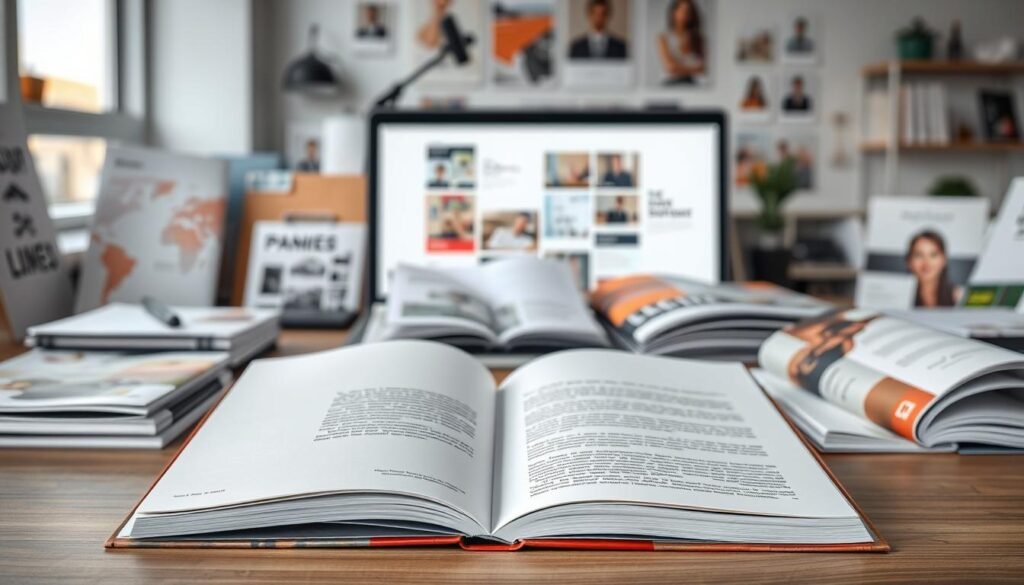
Publication Designer: books, magazines, and digital publications
Publication design blends narrative structure and production know‑how. I build typographic systems, sequence chapters, and prepare files for print or ePub delivery. Notable publishers such as Chronicle Books and Ten Speed Press hire designers for this exact work.
Layout Artist: clarity, hierarchy, and typography
Layout artists focus on rhythm and readable hierarchy. I set styles, manage widows/orphans, and balance type with graphics so dense content feels approachable. This precision helps museums and arts institutions produce catalogs and brochures.
Photo Editing Artist: selection, retouching, and art direction
Photo editing is both curatorial and technical. I select imagery, perform non‑destructive retouching, manage color profiles, and coordinate with photographers and editors. Clear image guidelines make reproductions reliable across print and the web.
- Production skills: prepress, bleeds, color profiles, and proofing.
- Portfolio pieces: before/after spreads, typographic systems, and image treatment guides.
- Transferable value: long‑form mastery improves storytelling and attention to detail for reporting and content‑heavy web projects.
Leadership, Strategy, and Cross‑Functional Roles
Leadership roles turn creative craft into measurable strategy that steers teams and campaigns.
I move from hands‑on work to shaping processes, briefs, and outcomes. This shift taps my design skills and my ability to align stakeholders around clear goals.
Art Director: guiding campaigns and creative teams
Art directors translate strategy into concepts. I guide designers, writers, and photographers to deliver cohesive campaigns across channels.
I show leadership by writing creative briefs, running critique sessions, and producing rationale decks that link ideas to metrics.
Creative Director: brand vision and multi‑channel strategy
As a creative director I steward brand direction and multi‑channel strategy. I set visual standards and ensure design decisions support business outcomes.
Alumni often move into these roles at firms like thredUP, Heath Ceramics, and Pottery Barn.
Marketing Specialist: brand, social, and lifecycle content
Marketing specialists use design across social posts, email sequences, and event collateral.
I plan content calendars, templates, and campaign assets that lift engagement and track conversions.
Product Developer: collaborating from concept to launch
Product developers partner with design, engineering, sourcing, and ops to bring concepts to market.
I contribute user‑centered visuals and production know‑how so prototypes become scalable products.
“Move toward direction roles after strong senior work and documented outcomes.”
| Role | Focus | How I Prove Readiness |
|---|---|---|
| Art Director | Campaign concepts, team leadership | Creative briefs, campaign systems, critique notes |
| Creative Director | Brand vision, multi‑channel strategy | Brand playbooks, cross‑department roadmaps |
| Marketing Specialist | Content, social, email | Content calendars, A/B results, templates |
| Product Developer | Concept to launch | Prototype cases, vendor specs, launch retrospectives |
How I build toward these roles: mentor junior designers, document impact, and show outcomes—engagement lift, conversion gains, or usability improvements.
Freelance and Independent Paths I Can Build
I build an independent practice that spans branding, web work, illustration, and motion for varied clients.
As a freelance designer, I scope engagements with clear deliverables, timelines, rounds, and usage rights. This helps me price fairly and meet expectations.
Freelance Graphic Designer: clients, scope, and portfolios
I attract clients with a focused portfolio that shows brand systems, UI pieces, and short case studies. I use discovery calls, a brief template, and written contracts with deposits and milestone invoicing.
Digital Illustrator and Multimedia Artist: custom visuals across media
I add illustration and multimedia to offer custom assets for campaigns, publications, apps, and social marketing. Diversifying projects across brand, product, and marketing stabilizes cash flow and grows repeat business.
“Good contracts and clear onboarding protect both creative freedom and client outcomes.”
| Service | Typical Scope | How I price |
|---|---|---|
| Brand identity | Logo, guidelines, asset kit | Fixed fee + usage |
| Web/UI | Templates, components, handoff | Project rate or retainer |
| Illustration & motion | Custom art, animations | Per asset or hourly |
How I scale: I partner with agencies as a contractor and sharpen business skills—proposals, project management, and client communication—to expand opportunities. My graphic design degree and internships give credibility that speeds referrals and trust.
Where Designers Work, Outlook, and How a Degree Accelerates My Career
I find designers working across many settings, from boutique studios to large product teams.
Industries I target include advertising firms, consultancies, marketing agencies, media outlets, and cultural institutions. Big in‑house teams at tech firms and retailers also hire for specialized roles in brand, packaging, and user interface.
Industries and employers: agencies, tech, cultural institutions, and in‑house teams
I reference employers such as Nike, adidas, The New Yorker, Adobe, and Wieden+Kennedy to show the range of opportunities. Smaller studios and nonprofits like PICA or Mercy Corps offer mission‑driven work and varied day‑to‑day scope.
Salary and growth snapshots informed by the U.S. Bureau of Labor Statistics
Bureau labor statistics (2023) show medians: graphic designers $58,910; web and digital interface designers $98,540; web developers $84,960; art directors $106,500. Projected growth through 2033 favors web and digital design (~8%) over traditional roles (~2%).
Why portfolios, internships, and real‑world client projects matter
A completed design degree plus a tight portfolio and internships cuts ramp time. Real projects prove I deliver on brand, packaging, web, and user experience briefs. Employers use portfolios to judge impact more than transcripts.
“A strong portfolio and internship experience often open doors to higher pay and specialized roles.”
| Setting | Typical Focus | Example Employers |
|---|---|---|
| Agencies & Studios | Campaigns, branding, packaging | Wieden+Kennedy, OMFGco, Design Portland |
| In‑house Tech Teams | Product UI, user experience, component libraries | Adobe, Apple, Google, Dropbox |
| Cultural & Media | Editorial design, exhibitions | The New Yorker, PICA, Willamette Week |
| Freelance / Consulting | Cross‑sector projects, short engagements | Brands, startups, nonprofits |
Conclusion
I close by saying clear goals plus steady work turn study into career gains. A focused program and client projects build brand, typography, digital, and print skills that employers value.
My next step is to pick a target path and curate case studies that prove competency. I’ll seek internships or freelance engagements to fill gaps and test roles like brand identity designer or illustrator.
I aim to show impact inside teams and businesses so leadership tracks open up. With measurable outcomes and collaboration, I can move toward director roles or scale as a freelance graphic designer.
Design remains a practice of iteration; clarity and consistent projects compound momentum for long-term careers.